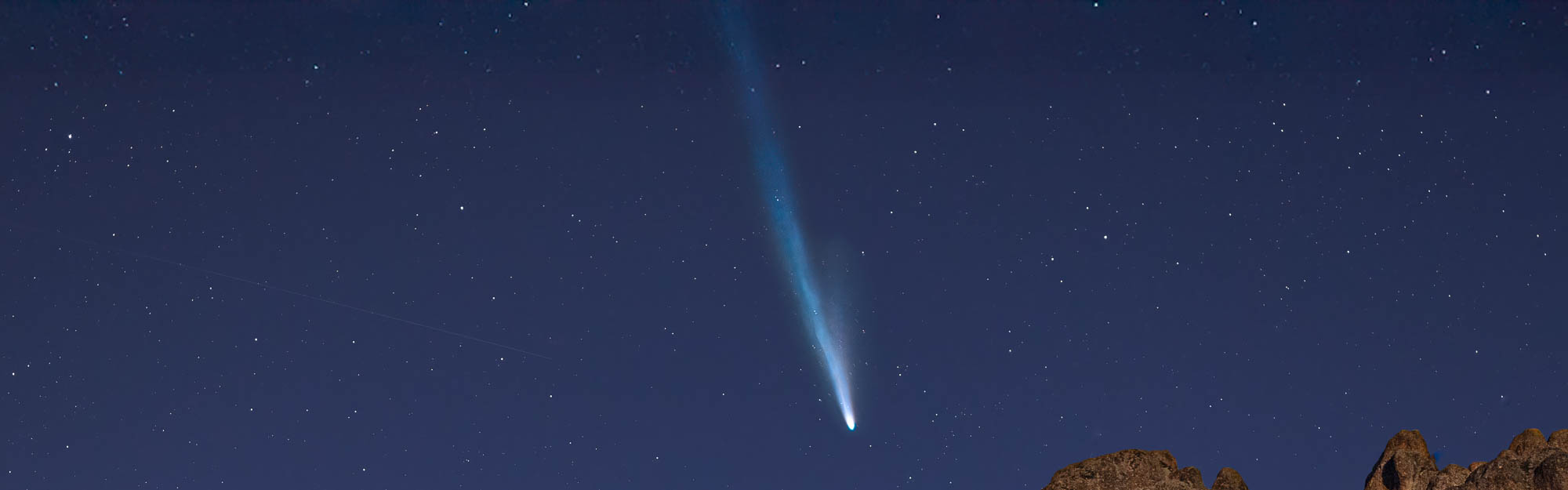
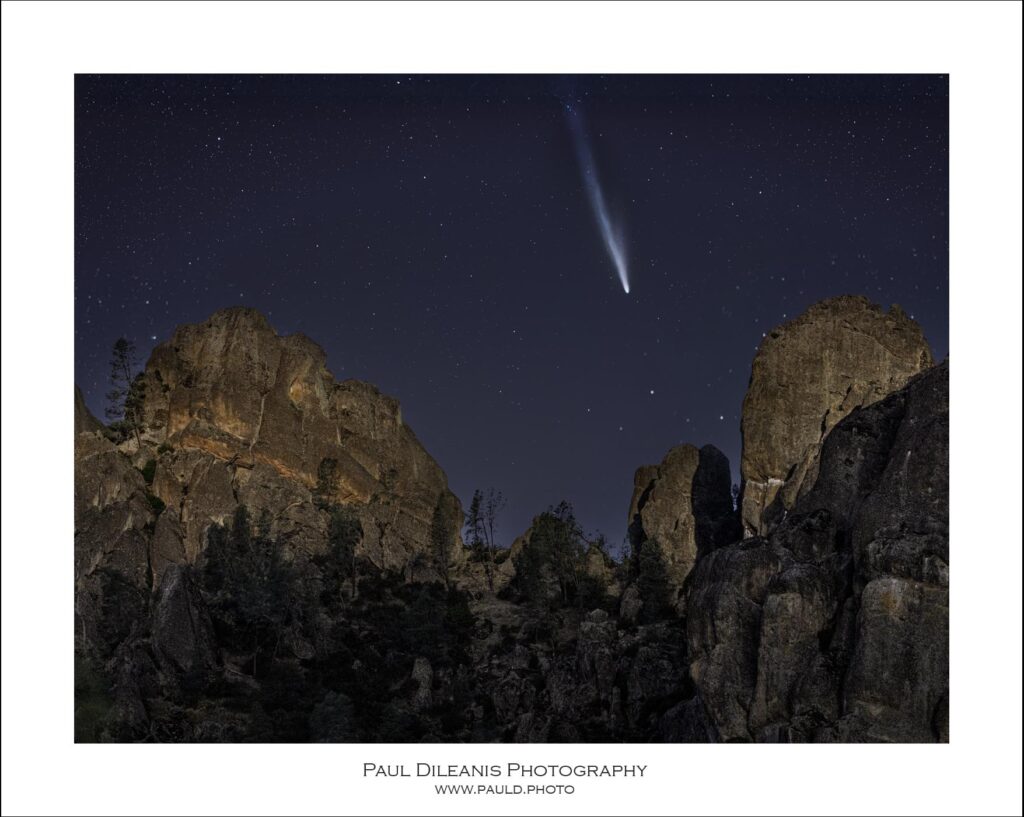
Comet A6 Lemmon above the High Peaks in Pinnacles NP on November 7, 2025.
‘In the wake of a comet, we find the poetry of the night sky.’ – Carl Sagan
Through the centuries comets have been shrouded in mystery and fear. In the Middle Ages they were believed to portend natural disasters such as floods and earthquakes. As recently as 1910, the return of Halley’s Comet caused panic worldwide. Now we know these celestial visitors for what they are, balls of dust and ice orbiting the sun. Leftovers from the formation of the solar system 4.6 billion years ago.
Comets today are no longer feared and have become a source of wonder for anyone observing the night sky. Photographers are no exception. Today’s digital cameras are a powerful tool for capturing images that reveal the beauty of complex structures such as the ion and dust tails which are barely visible to the naked eye.
Earlier this month I decided to have one more go at photographing Comet A6 Lemmon. This comet has been adorning the night skies from late September through mid-November and will soon be vanishing from view. The next time it will be visible from Earth will be in 1,120 years.
Pinnacles NP far to the south of the Bay Area light pollution and under the dark skies of the Diablo Mountain Range was my choice for a location. In addition to the dark skies, the towering High Peaks would make a dynamic foreground above which to showcase the comet. Utilizing ‘The Photographer’s Ephemeris’ and ‘Stellarium’, two powerful tools for landscape and astrophotography, I was able to pinpoint the exact position for my planned shot along the Condor Gulch Trail. To reach this site would require a 1.4 mile hike with an elevation gain of 1,100 feet while carrying 40 pounds of camera gear.
As I trudged up the trail in the late afternoon with my load of camera gear I remembered what I always tell students in my workshops,” The hardest part of night photography is getting out and doing it.” Many of the hikers I met rushing to their cars to beat the darkness were amazed that I was just getting started. Most were totally unaware of the comet.
To photograph the comet, I mounted my Canon R5 and RF 100/2.8 Macro lens on an iOptron Sky Tracker Pro equatorial mount. The equatorial mount enabled the camera to track the stars allowing for long exposures without the stars or comet becoming streaks across the sky. The longer exposure combined with stacking the images later allowed me to capture more signal or detail to bring out the color and patterns in the ion tail of the comet.
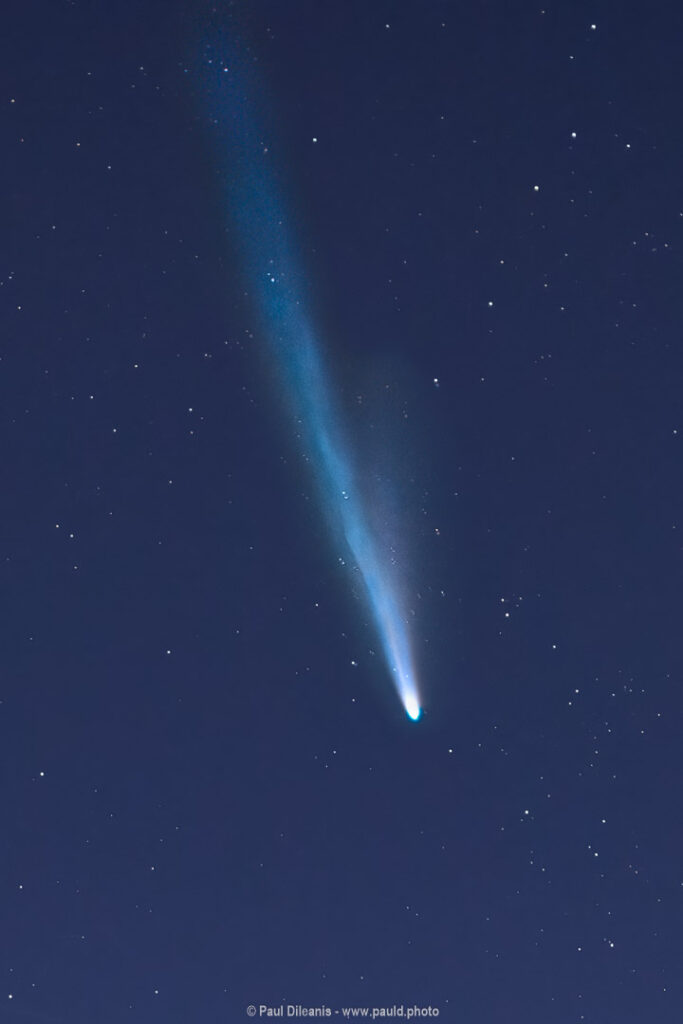
Whether you’re capturing a comet, star trails, a full moon, or a wide-angle shot of the Milky Way, night sky photography can be thrilling for beginning and advanced photographers alike.
If you found this post interesting you may want to check out my previous blog from 2020 here: Comet Neowise
Interested in creating amazing images of the night sky? Think about joining me on one of my upcoming workshops. See the complete schedule HERE.
Copyright 2025 Paul Dileanis
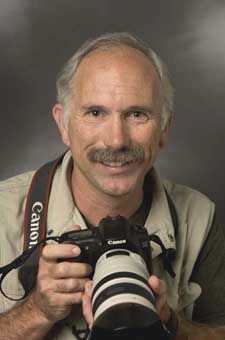
Author Biography:
Paul is a former US Navy Photographer. After leaving the Navy he was employed as a scientific, technical and underwater photographer for the Department of the Navy. In 1995 Paul relocated to the Bay Area and started an Aerial and Architectural Photography business. Today he enjoys spending time engaging with nature while sharing his knowledge and enthusiasm for photography by teaching landscape photography workshops.