“A photograph is a question, not an answer.”
Ferdinando Scianna, Magnum Photographer
In the quote above, photographer Ferdinando Scianna is most likely referring to the final image. A good photograph, or any good art, will lead the viewer to ask questions. Questions can be simple. Where or how was the image created? Do I like the image? Or the questions can be more complex. Is there a story behind the image? What is the photographer trying to tell us or make us feel?
But let us rewind a little. Before an image is visualized and captured there are many questions a photographer should be asking in order to create a successful photograph.
Questions Every Photographer Should Ask
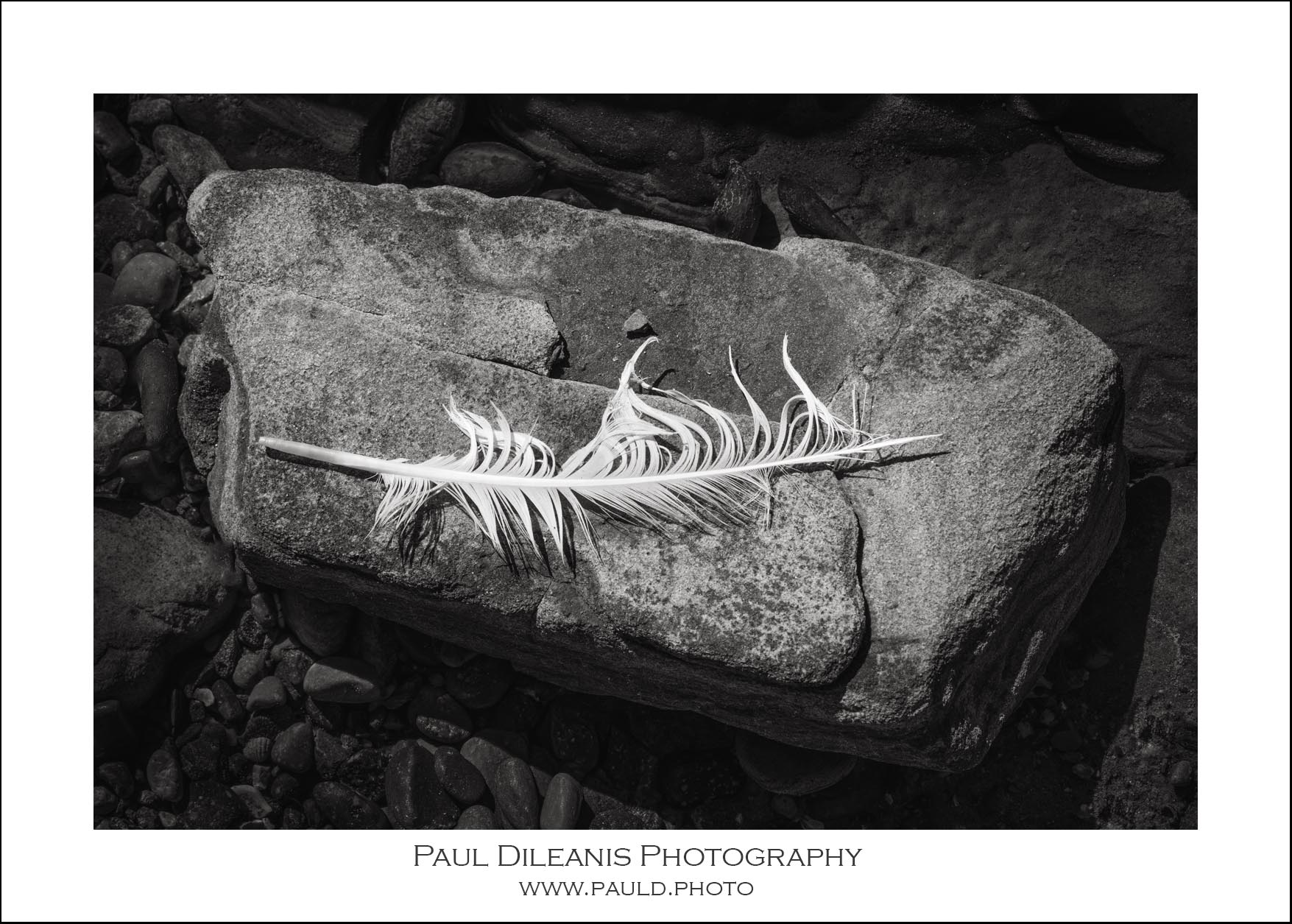
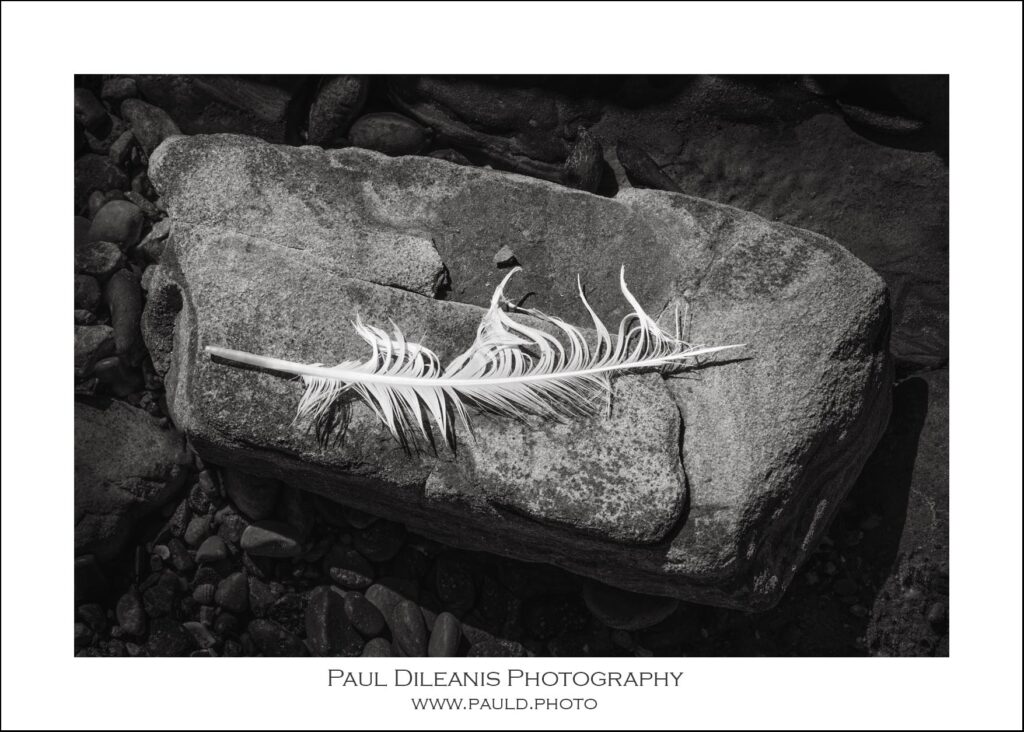
While exploring the rocky shoreline at Weston Beach in Point Lobos State Natural Preserve I came upon this feather perched on top of a rock. Initially I was drawn to the luminosity of the white feather on the dark rock, but as I composed the image I was drawn in by the imperfections of the feather. The tortured yet graceful barbs of the feather seemed to tell a story that set my thoughts on a path. A path that led to questions. How did the feather end up on the rock? Was it washed there by the tide? Was it deposited by the waves? Or was it tossed down from the heavens by Helios as a warning not to fly too close to the sun?
Eventually the path of my thoughts led to the task at hand. How can I capture what I am thinking and feeling about the feather?
Photography is a union of vision and craft
For this post I am going to divide the topic into two categories, questions relating to the concept of photographic vision and questions you should consider while capturing your images. In combination, these concepts or questions will help you to articulate and express your creative vision. It is not necessary to answer every question each time you take a photograph, but these or similar questions should be on your mind at some level as you work.
Questions Relating to Vision
These are the first questions you might ask yourself as you look through the viewfinder.
- Subject – Is there a clear single subject?
- Attraction – What about this subject captures my attention and draws me in?
- Message – What is it about the subject that I wish to convey?
Making sure that there is a clear, obvious subject will not only help you clarify your vision, but it will also ensure that someone who views your image will easily identify the subject.
When something catches your eye, it is helpful to analyze the qualities of the subject that attract you. There are several ‘triggers’ that can grab your attention; among them are luminosity, contrast, color, geometry and atmosphere. Identifying these qualities can help define the message you wish to convey in the final image.
In the case of my sample image, yes, there is a clear subject, the feather. I was drawn in by the luminosity and contrast of the scene as well as the question of how did this prospective image connect with me under the shadow of Edward Weston on this rocky beach? Finally, what am I trying to express? Thoughts that come to mind are that the subject appears discarded, isolated and flawed; that there is a quiet dignity in imperfection.
Questions Relating to Craft
Once you have some clarity as to your vision, your next questions will be a matter of technique. At this point I ask you to look beyond the standard exposure considerations of shutter speed, f-stop and ISO as they relate to tonal values and consider their relationship to other aspects of capturing the image as well. Ansel Adams referred to this as ‘Basic Image Management’. To put it simply Basic Image Management, or BIM for short, is understanding how the camera-capture-image processing sequence modifies the subject as it records it, or as Ansel Adams wrote in his book The Camera, “The term image management refers to those controls we employ to alter the image formed by the lens and projected on the film.”
- Point of View – Where should I place the camera?
- Lens Choice – What focal length lens best expresses the subject?
- Composition – Where should I place the subject in relation to other elements in the scene?
- Shutter Speed – How will my choice of shutter speed affect the feeling of the image?
- Depth of Field – Is your subject best expressed isolated from the background or as a part of the greater picture?
Where you place the camera, your point of view, will have the greatest impact on how you express the subject. Subtle changes in camera position will enhance the image. Since the point of view is fixed at the moment you release the shutter, careful attention should be given to choosing your camera angle.
Once you have established your point of view or as some call it, your ‘line’, you must determine where along the line to place the camera. This decision will establish the perspective you feel best expresses the subject. Don’t assume that changing the lens focal length is equivalent to changing your distance from the subject. The act of changing the focal length does not alter the perspective, only how much is included or excluded in the final image.
The composition of the image, where to place the elements to achieve balance, will also influence your choice of lens.
Changing your shutter speed can influence the atmosphere or mood of the image. Long shutter speeds can create a feeling of motion transforming your images into ethereal or dream-like compositions. Fast shutter speeds will stop movement creating dynamic images where the subject is frozen in time.
Depth of field creates a range of focus in a photograph, allowing certain subjects to appear sharp while others are blurred. This effect can enhance the visual impact of an image by directing attention to the main subject and adding a sense of depth to the composition.
All the decisions you make regarding image management are meant to control the optical image at the time of capture.
Make decisions that will lead to the photograph you want
Each of the questions I mention contains a whole subset of related questions. You may be able to think of many more questions on your own. It may seem like a lot to expect, to ask all these questions each time you look in the viewfinder, but with practice much of this process will become intuitive. When you understand how each step in the photographic process affects the final result, you will make deliberate choices that align with your creative vision. This will lead you down a path, a path littered with questions, a path to creating more expressive and artistic photographs.
Keep asking questions; keep taking photographs; eventually you may even answer the question “What kind of photographer am I?” In the meantime, enjoy the journey.
Suggested reading
Ansel Adams “The Camera”. Pay particular attention to Chapter 7, Basic Image Management
David duChemin “The Heart of the Photograph.” 100 Questions for making stronger, more expressive images.
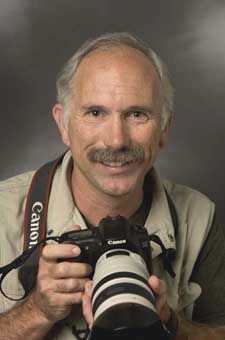
Author Biography:
Paul is a former US Navy Photographer. After leaving the Navy he was employed as a scientific, technical and underwater photographer for the Department of the Navy. In 1995 Paul relocated to the Bay Area and started an Aerial and Architectural Photography business. Today he enjoys spending time engaging with nature while sharing his knowledge and enthusiasm for photography by teaching landscape photography workshops.